
This is a follow-up to the Delayed power-up post, this time using some P-MOSFETs (in SOT-23 SMD form, i.e. tiny). The way I’m testing these, is by using a 1 kΩ resistor as simulated load, and hooking things up as follows:
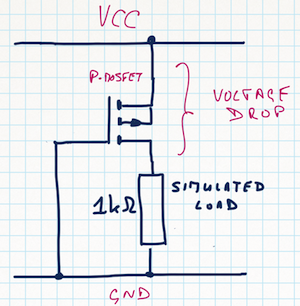
These components were not selected for this purpose, in fact, I picked units with a very low switching threshold voltage, so that they can reliably be switched on from an I/O pin, even if we were to run at just 1.8V.
Here are the characteristics of the Philips BSH203 P-MOSFET:
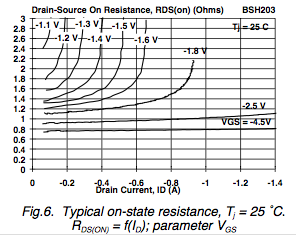
Just over 1 Ω resistance when driven low by 1.8V, so with a 50 mA load, the voltage drop over this MOSFET will be just over 50 mV.
When placed in the Component Tester, and zooming in on the interesting bit, we get:
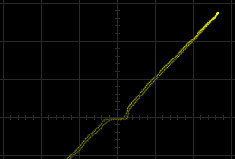
Each major horizontal division is 2V, so this thing switches on at about 0.5V.
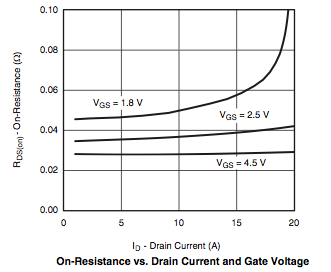
For comparison, the characteristics of the Vishay SI2333 P-MOSFET:
And in this case, the Component Tester shows this (sorry, can’t zoom in with this setup):
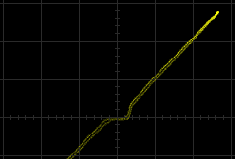
A slightly higher turn-on voltage, but note that the ON resistance is considerably lower at 1.8V: only 0.05 Ω. Not surprising, when you consider that this MOSFET can probably switch over 5 A (without self-destructing from the heat dissipation).
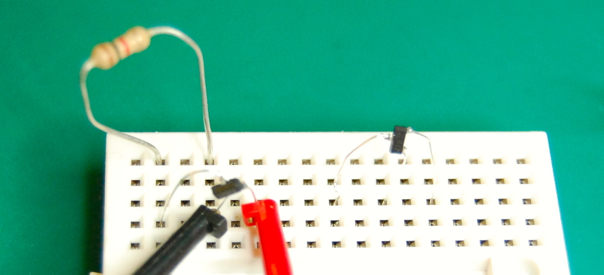
Here’s what these tiny components look like, with wires soldered on for “debugging”:
Looks like either of these will do the trick, when switched from an I/O pin anyway.