
The tiny rechargeable Lithium batteries I mentioned recently are another way to try and retain some charge overnight, just like the supercap mentioned last week.
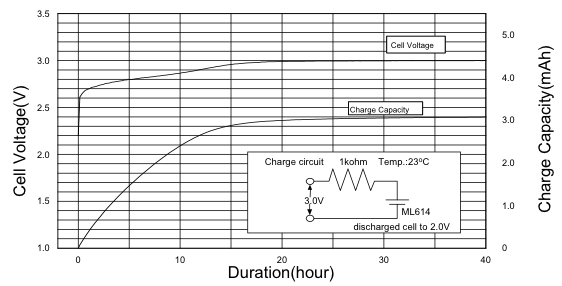
First thing to do was to charge it up for a day, using a 1 kΩ resistor and a 3.0V supply:
I adjusted the radioBlip sketch, to switch back to 8 MHz (because the ATmega will be running well below 3.3V):
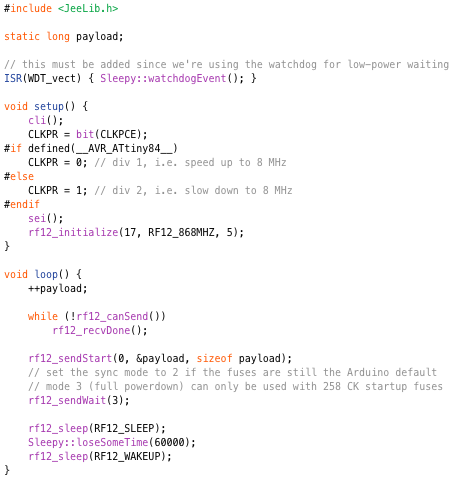
And I used these fuse settings:
- efuse 0x06 = BOD 1.8V
- hfuse 0xDE = OptiBoot (512b)
- lfuse 0xCE = fast 16 MHz resonator startup
This should allow a JeeNode to work all the way down to 1.8V (the RFM12B radio only officially supports down to 2.2V but usually still works a bit below that). I also used a JeeNode with no regulator, and added a 100 µF cap to handle the peak currents during packet transmission (100 µF is a bit excessive – less probably also works fine):
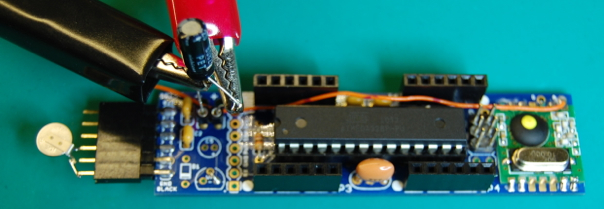
And sure enough, even with 2.75 V left in the battery, it starts up fine and starts sending out packets.
Unfortunately, I accidentally shorted out the battery while fiddling with the cables – so the charging process needs to be repeated for duration tests :(
Makes one wonder if the discharge graph is equally nicely shaped and if reading power level using the node itself is an option. Earlier comments on the AA board didn’t look promising (ie. averaging was needed). Contest cap vs battery?